
Affordable Dental Bridge in Singapore

Bridging the gap, restoring confidence — A natural-looking bridge crafted to fit comfortably and bring your smile together.
- Price: From $1,199 per unit.
- Treatment Duration: Two to three appointments over 1 to 2 weeks
What Is a Dental Bridge?
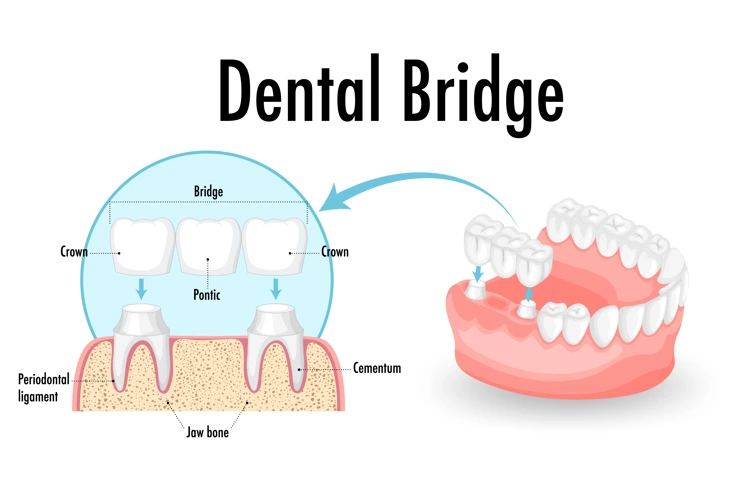
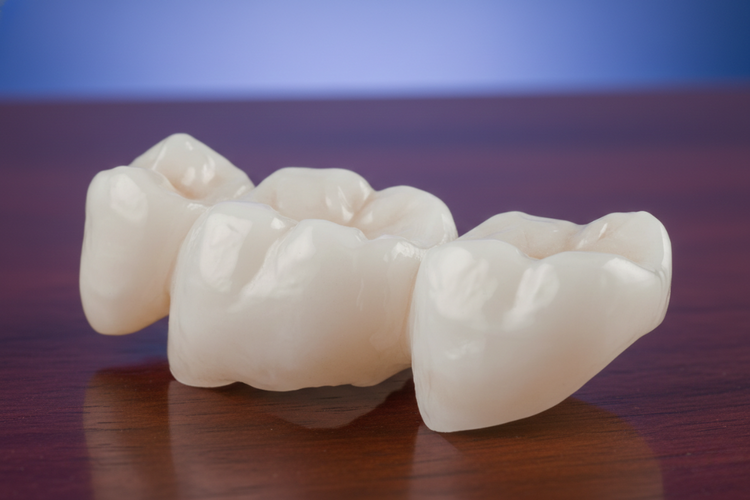
A dental bridge is a fixed dental restoration that replaces one or more missing teeth. It has a false tooth in the middle, called a pontic, with a crown on each side that fits over the neighbouring teeth to hold it in place. In some cases, dental implants are used as the support instead of natural teeth.
Unlike a denture, a dental bridge is cemented in place and cannot be removed. It lets you chew and speak much like your natural teeth, and you clean it by brushing and flossing as normal.
WhatsApp Us Now
Types of Dental Bridges
Four main types of dental bridges are used, each suited to different needs.
| Type | How It Works | Best Suited For | Considerations |
|---|---|---|---|
| Traditional | Crowns on both neighbouring teeth hold the artificial tooth in place | Most common option when two healthy neighbouring teeth are available | Requires reshaping of both neighbouring teeth |
| Cantilever | A crown on one neighbouring tooth holds the artificial tooth in place | Gaps where healthy teeth exist on just one side | Less suitable for back molars due to single-anchor design |
| Maryland | Metal or porcelain attachments bonded to the back of neighbouring teeth hold the artificial tooth in place | Front teeth where biting forces are lower | Preserves more natural tooth structure |
| Implant-supported | Dental implants placed in the jawbone anchor the bridge | Multiple consecutive missing teeth, or when neighbouring teeth cannot support a traditional bridge | Does not rely on natural teeth for support |
Dental Bridge Materials
Dental bridges are typically made from three common materials, each with differences in their appearance, durability, and cost.
Porcelain-Fused-to-Metal (PFM)
Composition: A metal core covered with porcelain.
Strengths: The metal base provides strength, while the porcelain mimics the
colour of natural teeth. It offers a balance of durability and aesthetics at a moderate price
point.
Potential limitations: The metal underneath may cause a greyish line to appear
at the gum margin over time, particularly if gums recede.
All-Ceramic or All-Porcelain
Composition: A ceramic material with no metal.
Strengths: It produces the most natural-looking results, making it a popular choice for
front teeth.
Potential limitations:
Less
resistant to fracture than metal-containing alternatives and may not be recommended for back
teeth that bear heavy chewing loads.
Zirconia
Composition: Zirconium dioxide, which combines high strength with a tooth-like
appearance.
Strengths: It
resists
chipping better than traditional porcelain and does not produce the dark gum line associated
with PFM bridges. It is suitable for both front and back teeth.
Potential limitations: Typically more costly.
When Is a Dental Bridge Suitable?
A dental bridge is typically suitable when you have one or more missing teeth with healthy neighbouring teeth or implants to serve as anchors. Factors that affect suitability include:
- Neighbouring tooth health – The supporting teeth must be structurally sound. Large fillings, significant decay, or gum disease may prevent them from bearing the load.
- Gum and bone condition – Healthy gums and adequate bone support contribute to long-term stability.
- Bite alignment – Severe misalignment or grinding habits may need to be addressed first.
- Gap size – Bridges typically replace one to three consecutive missing teeth. Larger gaps may require implant-supported solutions.
WhatsApp Us Now
The Dental Bridge Procedure
At True Dental Studio, getting a dental bridge generally requires two to three appointments spread over one to two weeks.
-
1Consultation
Your oral health is assessed to determine if a dental bridge is suitable. This includes examining the neighbouring teeth that will support the bridge. Treatment options are discussed based on your needs.
-
2Tooth Preparation
If suitable, local anaesthesia is administered and the neighbouring teeth are reshaped during the same visit to make room for the crowns that will hold the bridge. Impressions or digital scans are then taken and sent to a dental laboratory. A temporary bridge is placed to protect the prepared teeth.
-
3Bridge Fabrication
Your custom bridge is made in a laboratory, matching the shape, size, and colour to your natural teeth.
-
4Fitting & Cementing
At your next appointment, typically one to two weeks later, the temporary bridge is removed and the permanent bridge is checked for fit and colour. Any adjustments are made before the bridge is cemented into place.
How Long Does a Dental Bridge Last?
A well-maintained dental bridge typically lasts 10 to 15 years, though some last
longer.
Longevity depends on the material used, how well the bridge fits, and how you care for it. Stronger
materials like zirconia tend to outlast all-porcelain, especially for back teeth. A precisely fitted
bridge distributes chewing forces evenly, reducing wear over time.
Caring for Your Dental Bridge
Daily cleaning around and beneath your dental bridge prevents decay and gum disease from developing at the neighbouring teeth.
- Brushing – Brush twice daily with fluoride toothpaste, paying attention to where the bridge meets the gum line.
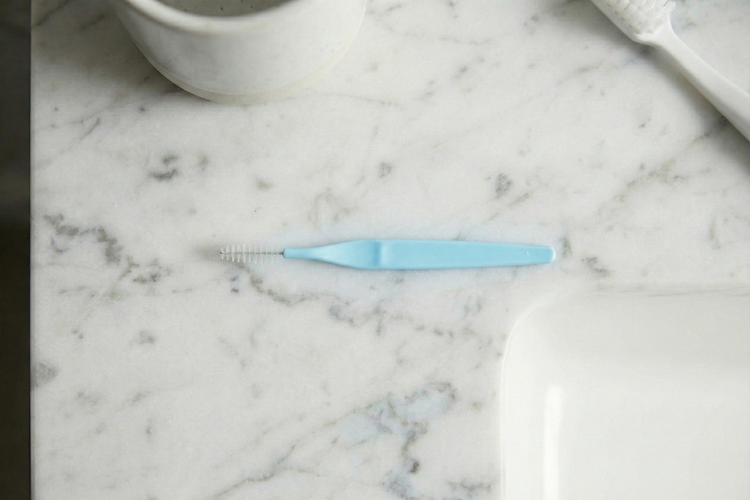
- Flossing – Standard floss cannot pass between connected bridge teeth. Use a floss threader, interdental brush, or water flosser to clean beneath and around the bridge.
- Diet – Avoid sticky foods that could dislodge the bridge and hard foods that could crack it. If your bridge feels loose or causes discomfort, schedule a dental appointment promptly.
Regular dental check-ups allow for scaling and polishing to remove plaque buildup, and help catch early signs of loosening or decay before they become bigger problems.
Cost of Dental Bridge in Singapore
At True Dental Studio, the cost of a dental bridge is as follows:
| Treatment | Price* |
|---|---|
| Consultation | $27.25 to $65.40 |
| Second Opinion Consultation | $27.25 to $65.40 |
| Porcelain-fused-to-metal (PFM) | $1,199 to $1,635 per unit |
| Zirconia | $1,417 to $1,635 per unit |
*Prices are NETT and inclusive of GST and laboratory fees.
Can I Use MediSave for a Dental Bridge?
Dental bridges are classified as non-surgical treatment and are therefore not claimable under MediSave. This applies to most
routine dental work, including extractions, dentures, braces, and clear aligners.
Permanent crowns are an exception. Since 1 June
2026, patients aged 60 and above can claim them under Flexi-MediSave at
CHAS clinics.
Alternatives to Dental Bridges
Dental bridges are one of several options for replacing missing teeth. Depending on your situation, alternatives may be more suitable.
- Dental implants – A titanium post surgically placed in the jawbone, topped with a crown. Does not require reshaping of neighbouring teeth and helps preserve jawbone density. Longer lasting but involves surgery and higher upfront cost.
- Removable dentures – Partial dentures clip onto existing teeth to fill gaps. Less expensive and do not require altering neighbouring teeth. However, they feel less stable and require daily removal for cleaning.
Where to Get a Dental Bridge Near Me
Book Dental Bridge Appointment
Book NowEnquire More Through Email
Email Us NowEnquire More Through WhatsApp
WhatsApp Us NowWhy Choose True Dental Studio?

Friendly Dentist and Team
We treat every patient to the best of our ability. This is why families across Singapore have continued their dental care with us for years.

Minimal Discomfort
We are committed to keeping our patients as comfortable as possible, minimising any discomfort during treatment.

Affordable Treatments
We believe in pricing quality treatments at a competitive rate. We are transparent and upfront with our treatment costs.
Our Smile Scorecard
Frequently Asked Questions
A dental bridge restores chewing function and appearance without surgery, and treatment is typically completed within two weeks. However, it requires reshaping healthy neighbouring teeth to support the crowns, and it does not prevent bone loss at the gap site. Bridges also have a limited lifespan of around 10 to 15 years and may eventually need replacement.
Getting a dental bridge is generally not painful. Local anaesthesia is used during tooth preparation, so you should not feel discomfort during the procedure. Some sensitivity or mild soreness around the prepared teeth may occur afterward, but this typically subsides within a few days. If you experience persistent pain after your bridge is fitted, it is advisable to consult your dentist.
A dental bridge is generally less expensive upfront than a dental implant. However, implants typically last longer and do not require altering neighbouring teeth, which may make them more cost-effective over time. The right choice depends on your oral health, budget, and long-term goals, so it is advisable to discuss both options with your dentist. At True Dental Studio, a bridge starts from $1,199 per unit, while an implant starts from $3,815.
The main disadvantage of a dental bridge is that it requires reshaping the healthy neighbouring teeth to support the crowns. This permanently alters tooth structure that might otherwise remain untouched. Additionally, a bridge does not stimulate the jawbone beneath the missing tooth, which may lead to gradual bone loss over time. That said, a bridge remains a reliable and non-surgical option for restoring function and appearance when managed with proper care.
Removable partial dentures are generally a cheaper alternative to dental bridges. They clip onto existing teeth to fill gaps without requiring permanent alterations to neighbouring teeth. However, they feel less stable than fixed options and need to be removed daily for cleaning. At True Dental Studio, partial dentures start from $436, inclusive of GST. Speak with our friendly dentists to find the most suitable option for your needs.
You typically need to wait 8 to 12 weeks after a tooth extraction before getting a dental bridge. This allows the gum and bone tissue to heal properly. In some cases, healing may take longer depending on factors such as bone density, the complexity of the extraction, or whether bone grafting was performed. It is best to consult your dentist to assess your healing progress before proceeding with treatment.
Most patients are satisfied with their dental bridges, as they restore chewing function and appearance without surgery. However, some may have concerns about reshaping healthy neighbouring teeth or the eventual need for replacement. Discussing your expectations, oral health, and alternative options with your dentist beforehand can help you make an informed decision that suits your long-term goals.
Yes, you can eat normally with a dental bridge once it is fully fitted and you have adjusted to it. A bridge restores chewing function similar to natural teeth. However, it is advisable to avoid very hard or sticky foods that could damage or dislodge the bridge. Cutting food into smaller pieces initially can help you adapt during the first few days.
A dentist may not recommend a dental bridge if the neighbouring teeth are not healthy or strong enough to support it. Other reasons include significant bone loss, gum disease, or a gap that is too large for a traditional bridge. In such cases, alternatives like dental implants or removable dentures may be more suitable. However, if your teeth and gums are healthy, a bridge remains a reliable option for replacing missing teeth.
A well-maintained dental bridge typically lasts 10 to 15 years before replacement may be needed, though some last longer with proper care. Factors that influence lifespan include the material used and oral hygiene habits. Signs that a bridge may need replacing include loosening, visible damage, or decay in the supporting teeth. Regular dental check-ups help monitor the condition of your bridge and catch any issues early.
Yes, the natural teeth supporting a dental bridge can still decay, particularly where the crown meets the gum line. Plaque and bacteria can accumulate in these areas if not cleaned properly. This is why daily cleaning beneath and around the bridge is essential. Regular dental check-ups help detect early signs of decay before they compromise the bridge or supporting teeth.
A dental bridge is permanently cemented onto the supporting teeth and is not designed to be removed by the patient. Unlike removable dentures, it stays fixed in your mouth and functions like natural teeth. However, a dentist can remove it if repair, replacement, or treatment of the underlying teeth is needed.
Dental implants generally last longer than bridges. With proper care, an implant can last 20 years or more, while a bridge typically lasts 10 to 15 years. However, longevity depends on factors such as oral hygiene, material quality, and overall health. Your dentist can advise which option is more suitable based on your specific situation.
In some cases, a dental bridge can be carefully removed and recemented if it has become loose but remains undamaged. However, removal risks damaging the bridge or the supporting teeth, so a new bridge may be required. If your bridge feels loose, it is advisable to see your dentist promptly to assess whether recementing or replacement is needed.
Clean your dental bridge daily by brushing twice with fluoride toothpaste, paying attention to where the bridge meets the gum line. Use a floss threader, interdental brush, or water flosser to clean beneath the artificial tooth and around the supporting teeth, as standard floss cannot pass between connected teeth. Regular scaling and polishing at dental check-ups also helps maintain the bridge.