
Frenectomy: Procedure, Recovery & Cost
Restore natural tongue and lip movement — Our oral surgeon provides frenectomy procedures to ease feeding, speech, and long-term dental issues caused by a restrictive frenum.
- Price: Please enquire
- Treatment Duration: About 30 minutes
What Is a Frenectomy?
A frenectomy is a minor surgical procedure that removes or modifies a frenum, a small fold of soft tissue that connects two structures in the mouth.
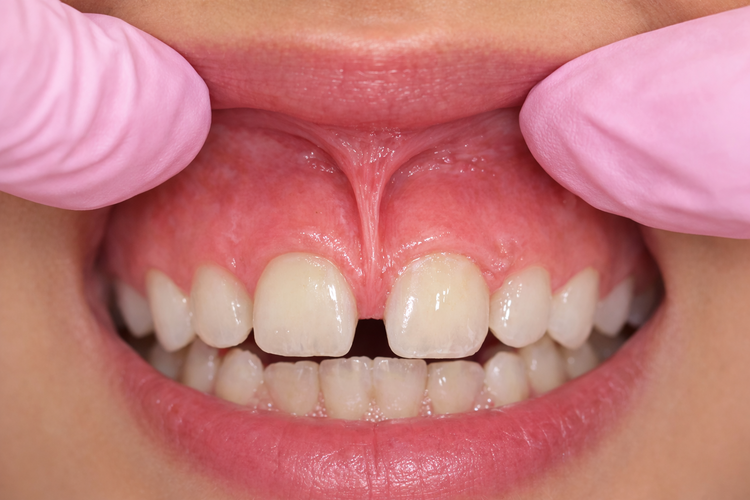
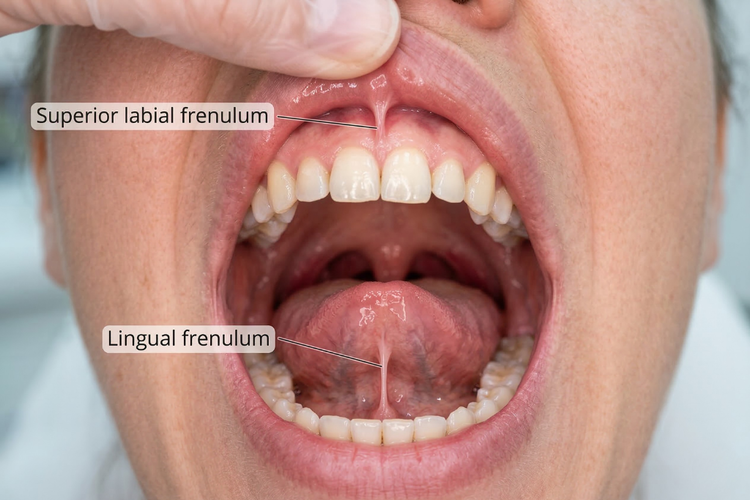
Two frenums are treated most often: the one joining your upper lip to the gum above your front teeth (the labial frenum), and the one tethering your tongue to the floor of your mouth (the lingual frenum).
A frenum that is too short, too thick, or too tight can hold the lip or tongue back and cause dental or functional problems. A frenectomy is a routine procedure for children and adults alike that removes or repositions that tissue, so the lip or tongue can move properly.
Types of Frenectomy
There are two main types of frenectomy, each targeting the different frena in the mouth.
Labial Frenectomy
A labial
frenectomy treats the labial frenum, the band of tissue between the upper lip and the
gum above the front teeth. When this tissue is thick or attaches too low between the central
incisors, it can pull on the gum or contribute to a gap between the upper front teeth.
Labial frenectomies are commonly performed as part of orthodontic care, particularly after a gap
between the front teeth has been closed. Re-opening of the tooth gap may occur if the labial
frenum is not removed.
Lingual Frenectomy (Tongue-Tied Surgery)
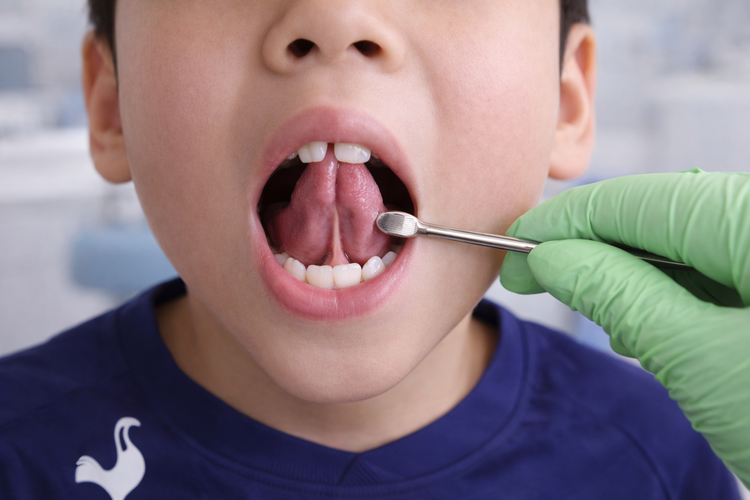
A lingual frenectomy treats the lingual frenum, the band of tissue beneath the
tongue. When this tissue is too short or tight, it restricts the tongue's range of motion, a condition
known as tongue-tie (ankyloglossia).
This restriction can affect feeding in infants or interfere with normal tongue movement in older
children and adults.
When Is a Frenectomy Needed?
A frenectomy is recommended when a frenum restricts normal function or contributes to dental
problems. Not every short or prominent frenum requires treatment. The decision depends on
whether it is actively causing issues or is likely to do so.
Common reasons include:
- Tongue-tie in infants – Difficulty latching during breastfeeding, poor weight gain, or feeding that causes pain for the mother. In some cases, releasing the frenum may help improve breastfeeding.
- Gap between front teeth – A thick labial frenum that extends between the upper central incisors can maintain a diastema even after orthodontic treatment. Removal may help prevent the gap from returning.
- Speech difficulties – A restricted lingual frenum may affect the pronunciation of certain sounds, particularly "l", "r", "t", "d", and "s" in some children. This is more relevant in older children who have not improved with speech therapy alone.
- Gum health concerns – A low-attaching frenum can pull on the gum tissue, potentially contributing to gum recession or making oral hygiene more difficult in that area.
- Orthodontic treatment planning – A restrictive frenum may be released before or after treatment with braces or clear aligners to support stable tooth alignment.
- Denture fit – In adults wearing dentures, a prominent frenum can interfere with the stability and comfort of the prosthesis.
Frenectomy vs Frenotomy
A frenectomy removes the frenum entirely, while a frenotomy makes a small cut to release it. Both procedures address a restrictive frenum, but they differ in scope.
| Key Differences | Frenectomy | Frenotomy |
|---|---|---|
| What it involves | Complete removal of the frenum, including its attachment to the bone | A simple snip or incision to release the frenum |
| Typical use | Thicker or more fibrous frena, labial frena causing orthodontic relapse, or cases requiring permanent removal | Thin, membranous lingual frena in newborns with tongue-tie |
| Typical patients | Older children, adolescents, and adults | Most commonly newborns and young infants; occasionally older children |
| Procedure time | 15 to 30 minutes | A few minutes |
| Recovery | Slightly longer healing; may involve sutures | Minimal recovery; often heals within days |
WhatsApp Us Now
How Is a Frenectomy Procedure Performed?
A frenectomy is a straightforward procedure typically completed in one visit, usually lasting 15 to 30 minutes depending on the technique used and the complexity of the case.

-
1Numbing the Area
Local anaesthesia is applied to ensure comfort. For very young children or anxious patients, additional sedation may be considered.
-
2Releasing or Removing the Frenum
The frenum is either surgically removed with a scalpel or released using a soft-tissue laser.
-
3Closing the Site
If a scalpel is used, a few small sutures may be placed. The area is then checked to confirm the restriction has been adequately released.
For newborns with a thin tongue-tie, a frenotomy (a simpler snip) may be performed instead. This procedure is very quick and may sometimes be performed without anaesthesia, as the tissue contains few nerve endings at that stage.
Frenectomy Recovery and Aftercare
Most patients recover from a frenectomy within one to two weeks. Discomfort is usually
mild and manageable with over-the-counter pain relief.
What to expect during recovery:
- First 24 to 48 hours – Mild swelling, tenderness, and slight bleeding at the site are normal. Applying a cold compress can help reduce swelling.
- Eating – Stick to soft foods for the first few days. Avoid spicy, acidic, or crunchy foods that may irritate the area.
- Oral hygiene – Brush your teeth normally but avoid brushing directly over the surgical site for the first few days. Gentle saltwater rinses after 24 hours help keep the area clean.
- Activity – Most children and adults can return to normal daily activities within a day or two.
Disclaimer: This information is provided for general educational purposes. Always follow the specific instructions given by your dentist or oral surgeon, as aftercare recommendations may vary depending on the procedure and individual healing.
Can the Frenum Reattach After a Frenectomy?
Reattachment is possible if scar tissue forms and restricts movement again during
healing. This is more common after lingual frenectomies, particularly in infants
and young children.
Your dentist may recommend tongue stretching exercises to help prevent the tissue from
reattaching during healing. These typically involve lifting the tongue toward the roof of the
mouth and holding it for a few seconds, repeated several times a day for a few weeks.
Attending follow-up appointments also allows your dentist to monitor healing and identify any
early signs of reattachment.
If significant reattachment occurs and symptoms return, a revision procedure may be recommended.
Potential Risks and Side Effects of a Frenectomy
Complications from a frenectomy are uncommon, but as with any minor surgical procedure, some risks are possible.
- Mild pain and swelling – The most common side effects after the procedure, usually resolving within a few days.
- Bleeding – Minor bleeding may occur, particularly with scalpel-based procedures. This typically stops on its own or with gentle pressure.
- Reattachment – The freed tissue may partially reattach if recommended stretching exercises are not performed as directed.
- Numbness or altered sensation – Temporary numbness near the site may occur but typically resolves as the tissue heals.
- Infection – Rare, but possible during healing if the area is not kept clean. Signs include increasing pain, swelling, or discharge after the first few days. Contact your dentist or oral surgeon if you experience these symptoms.
What Is the Cost of a Frenectomy in Singapore?
At True Dental Studio, we provide frenectomy treatment after an assessment by our oral and maxillofacial surgeon to determine whether the procedure is suitable for your condition.
| Treatment | Price* |
|---|---|
| Consultation | $27.25 to $65.40 |
| Second Opinion Consultation | $27.25 to $65.40 |
| Frenectomy (Infant / Children / Adults) | Please enquire |
*Prices are NETT and inclusive of GST.
Frenectomy procedures may be claimable through MediSave. The claimable amount depends on how the
procedure is classified under MOH's Table of Surgical Procedures. Contact us to find out more about
MediSave eligibility or for more information.

A frenectomy is a routine procedure that can improve oral function and help prevent certain dental problems in the long term. Recovery is usually straightforward, and many patients notice improvement quickly.
— Dr Albert Lee
A frenectomy is a routine procedure that can improve oral function and help prevent certain dental problems in the long term. Recovery is usually straightforward, and many patients notice improvement quickly.
— Dr Albert Lee
Book a Consultation for Tongue-Tie or Frenectomy Treatment
Book Frenectomy Appointment
Book NowEnquire More Through Email
Email Us NowEnquire More Through WhatsApp
WhatsApp Us NowWhy Choose True Dental Studio?

Friendly Dentist and Team
We treat every patient to the best of our ability. This is why families across Singapore have continued their dental care with us for years.

Minimal Discomfort
We are committed to keeping our patients as comfortable as possible, minimising any discomfort during treatment.

Affordable Treatments
We believe in pricing quality treatments at a competitive rate. We are transparent and upfront with our treatment costs.
Our Smile Scorecard
Frequently Asked Questions
A tongue-tie surgery or frenectomy usually causes mild discomfort rather than significant pain. Local anaesthesia is typically used to numb the area during the procedure, and most patients experience mild soreness or swelling afterwards. In newborns undergoing a simple frenotomy, the procedure is very quick and discomfort is usually brief. Older children and adults may notice mild tenderness for a few days, which can often be managed with basic pain relief.
Cutting a tongue tie may involve some risks, although complications are uncommon. Possible drawbacks include mild pain, bleeding, infection, or partial reattachment of the tissue during healing. In some cases, the procedure may not fully resolve feeding or speech concerns. However, when a tongue tie is clearly affecting feeding, speech, or oral function, many patients experience improved mobility and function after appropriate treatment and follow-up care.
Tongue-tie in newborns is often mild and may not cause significant problems in many babies. However, in some cases it can interfere with breastfeeding by making it harder for the baby to latch properly, which may lead to feeding difficulties or discomfort for the mother. When symptoms are significant, treatment such as frenectomy may be considered.
The most appropriate age for tongue-tie surgery depends on the severity of symptoms and how the condition affects feeding, speech, or oral function. In infants with breastfeeding difficulties, treatment may sometimes be considered early. In other cases, the procedure may be recommended later in childhood or adulthood if functional problems develop. Because not all tongue ties require treatment, it is advisable to consult a dentist or oral surgeon for an individual assessment.
If tongue tie goes untreated, many people experience no significant problems and may adapt to the restricted tongue movement. However, in some individuals it may contribute to breastfeeding difficulties in infancy, speech articulation issues in children, or oral hygiene and dental concerns later in life. The impact varies depending on the degree of restriction. If symptoms affect feeding, speech, or oral function, it is advisable to consult a dentist or healthcare professional.
Tongue-tie treatment is generally not considered a major surgery. Procedures such as frenotomy or frenectomy are typically minor oral surgeries performed in a short clinical visit using local anaesthesia. A frenotomy in newborns may take only a few minutes, while a frenectomy in older children or adults may take slightly longer and may involve sutures. Recovery is usually straightforward, although individual healing experiences can vary.
Babies may experience brief discomfort during a tongue-tie release, but the procedure is usually very quick. In newborns, the tissue under the tongue is thin and the procedure often takes only a few seconds. Some babies may cry during or shortly after the procedure, although this can also be related to being restrained. Many infants are able to feed shortly afterwards, which may help soothe them.
Tongue-tie cannot be fully corrected naturally because it involves a structural restriction of the lingual frenum. However, supportive approaches such as breastfeeding support, speech therapy, or oral exercises may help manage symptoms in some individuals. In cases where tongue movement significantly affects feeding, speech, or oral function, a healthcare professional may recommend a procedure to release the restriction.
Some babies appear to adapt to a mild tongue-tie over time as their mouth grows and feeding techniques improve. In these cases, the condition may not cause ongoing problems. However, a more restrictive tongue-tie may continue to limit tongue movement and affect feeding or speech development. If concerns arise about feeding or oral function, it is advisable to consult a healthcare professional for assessment.
Tongue-tie, medically known as ankyloglossia, is generally considered a variation in oral anatomy rather than a disability. Many people with tongue-tie experience no functional problems. In some cases, however, it may affect feeding in babies, speech pronunciation, or tongue mobility. Whether treatment is needed usually depends on the degree of restriction and the symptoms it causes.
Pacifiers do not treat or correct a tongue-tie because they do not change the structure of the lingual frenum. Some babies with mild tongue-tie may still use a pacifier comfortably, while others may have difficulty maintaining suction. If feeding difficulties or oral function concerns are present, it is advisable to consult a doctor, lactation consultant, or dentist for guidance.
A tongue-tie may affect speech in some children by limiting the tongue's ability to move freely. This restriction can make it harder to pronounce certain sounds that require tongue elevation or contact with the roof of the mouth, such as "l," "t," or "d." However, not all children with tongue-tie develop speech difficulties, and many speak normally. If speech concerns persist, it is advisable to consult a dentist, doctor, or speech therapist for assessment.
A frenectomy may be recommended when a tight or restrictive frenum interferes with normal oral function. This can include difficulties with breastfeeding in infants, speech articulation problems in children, or dental concerns such as a persistent gap between the front teeth or gum tension. Not every prominent frenum requires treatment. A dentist or oral surgeon will usually assess whether the restriction is causing symptoms before recommending the procedure.
The difference between a frenectomy and a frenotomy lies in how the restrictive tissue is treated. A frenectomy removes the frenum entirely, often including its deeper attachments, while a frenotomy involves making a small cut to release the tight tissue. Frenotomy is commonly performed in newborns with thin tongue-tie tissue, while frenectomy is more often used in older children or adults when the frenum is thicker.
A frenectomy removes the frenum completely, while a frenuloplasty reshapes or repositions the tissue using surgical techniques such as suturing. Frenuloplasty is sometimes performed when a more complex correction is needed to improve tongue mobility or reduce the chance of reattachment. The choice between procedures depends on factors such as the thickness of the frenum, the severity of restriction, and the patient's age.
A frenectomy generally has a low risk of complications, but some downsides are possible. These may include mild pain, swelling, bleeding, infection, or reattachment of the tissue during healing. In some cases, symptoms such as feeding or speech difficulties may not fully resolve after the procedure. Because outcomes vary, treatment decisions are typically based on the severity of symptoms and clinical evaluation.
A frenectomy does not usually close a gap between the front teeth on its own. Instead, it removes the tight frenum that may contribute to the gap or cause it to reopen after orthodontic treatment. The space is typically closed using braces or clear aligners, while the frenectomy helps support long-term stability once the teeth have been aligned.
A frenectomy is generally considered a minor oral surgical procedure that removes or releases a restrictive frenum. It is typically performed in a dental clinic using local anaesthesia and usually takes a short time to complete. The procedure is commonly used to address issues such as tongue-tie or tension from a tight labial frenum. Recovery is usually straightforward, although individual healing experiences may vary.
A frenectomy procedure typically takes about 15 to 30 minutes, depending on the location of the frenum and the complexity of the case. Simple releases may be completed more quickly, while procedures involving thicker tissue or sutures may take slightly longer. Most patients can return home shortly after the procedure and resume normal daily activities within a day or two, although full healing may take one to two weeks.
A frenectomy does not usually change the overall appearance of the face. The procedure focuses on releasing a small band of tissue inside the mouth to improve movement of the tongue or lip. While it may improve oral function or reduce tension in the gums, it typically does not alter facial structure or facial features.
Stitches may be used during a frenectomy depending on the surgical technique and the thickness of the tissue being treated. When the procedure is performed with a scalpel, a few small sutures are sometimes placed to support healing. Laser procedures may not require stitches because they can seal the tissue during treatment. Your dentist or oral surgeon will determine whether sutures are needed based on the specific case.
Some general dentists perform frenectomy procedures, particularly when the case is straightforward and within their training. In other situations, patients may be referred to specialists such as oral and maxillofacial surgeons or periodontists, especially if the frenum is thick or the procedure is more complex. At True Dental Studio, we offer frenectomy procedures performed by our oral and maxillofacial surgeon. You can book an appointment for a personalised assessment to determine your suitability for treatment.