

Bad breath can make you self-conscious in moments that should feel easy,
from a chat with a colleague to sitting close to someone you love. You may
find yourself covering your mouth when you laugh, keeping conversations
short or reaching for mints all day, while worrying about what other people
notice.
If this sounds familiar, you are far from alone. Bad breath, known medically
as halitosis, is thought to affect about 1 in 3 people, and it is
not always a sign of poor oral hygiene. In most cases, it starts in the
mouth, from bacteria on the tongue and around the gums.
Bad breath that lasts through the day, even with regular brushing, usually
has a cause that can be treated. Finding that cause, and knowing what to do
about it, can help you feel at ease up close and speak with confidence
again.

How to Tell If You Have Bad Breath
You can check for bad breath by:
- Lick and sniff your wrist – Lick the inside of your wrist, let it dry for a few seconds, then smell it.
- Smell your floss – Floss between your back teeth, then smell the floss.
- Check your tongue – Gently scrape the back of your tongue with a spoon and smell what comes off. A white or yellow coating often goes with bad breath.
- Notice the taste in your mouth – A sour or metallic taste that stays after brushing can be a sign of bad breath.
What Causes Bad Breath?
Bad breath is usually caused by bacteria in the mouth that break down food and dead
cells and release smelly sulphur gases.
Knowing the cause can help you tackle it in the right way.
The main causes, from the most common, are:
-
Mouth and gum problems
Bacteria build up on a coated tongue, in gum pockets and cavities, between the teeth, around infected teeth (including wisdom teeth) and on braces or dentures that are not cleaned well. A dry mouth adds to this, as there is less saliva to wash bacteria away. Brushing alone can miss the tongue and gumline, so bad breath from the mouth can continue even after brushing. -
Food, drink and smoking
Garlic and onions release smells that are breathed out from the lungs, and bacteria break down the protein in milk into smelly gases. Coffee, alcohol, smoking and fasting dry the mouth, which lets bacteria build up. -
Acid reflux and stomach problems
Bad breath from the stomach is uncommon, but acid reflux can carry stomach acid and partly digested food up into the throat and mouth, causing a sour smell. -
Throat, nose and sinus problems
Bacteria at the back of the throat break down mucus from post-nasal drip or sinus infections, and the food and mucus caught in tonsil stones. Infected tonsils can also give off a foul smell. -
Long-term health conditions
Less commonly, diabetes, kidney disease or liver disease can change the smell of the breath, as substances that build up in the blood, such as ketones, are breathed out. These conditions usually come with other symptoms.
WhatsApp Us Now
Tips on How to Get Rid of Bad Breath
You can get rid of most bad breath at home with good oral hygiene, quick fixes when you need them and the right mouthwash.
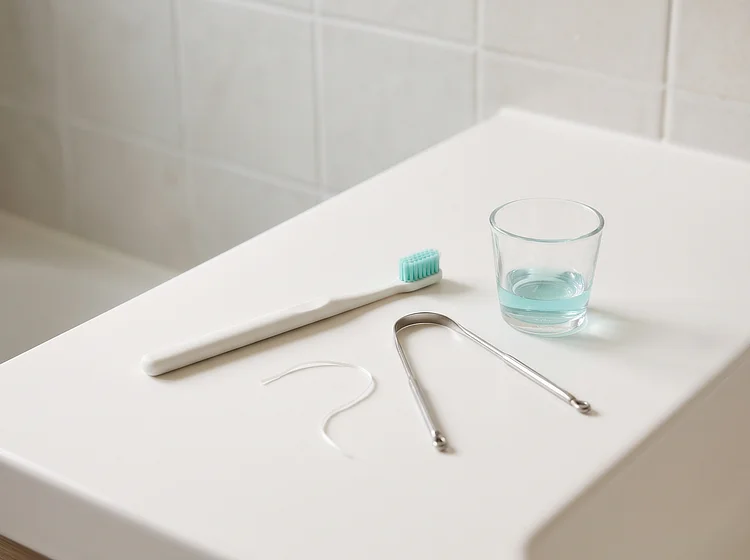
Practise Good Oral Hygiene
Good oral hygiene removes the bacteria that cause bad breath. A daily routine includes:
- Brush twice a day – Brush for 2 minutes with a fluoride toothpaste, including along the gumline.
- Clean your tongue – Use a tongue scraper or your toothbrush to clean from the back of the tongue to the front once a day, as the back of the tongue holds much of the bacteria that cause bad breath.
- Floss or use interdental brushes – Clean between your teeth once a day to remove the food and plaque a toothbrush cannot reach.
- Clean dentures, retainers and aligners – Clean them every day as instructed, and take dentures out at night.
Mouthwash for Bad Breath
A mouthwash for bad breath can freshen your breath for a short time, but it does not
treat the cause on its own. Mouthwash should be used in addition to brushing,
flossing and tongue cleaning, not instead of them.
Antibacterial mouthwashes may reduce the bacteria that cause bad breath, while
others mainly cover the smell. Your dentist can advise which type suits you,
especially if you have gum disease or a dry mouth.
Quick Fixes for Fresh Breath
Quick fixes mask the smell briefly without removing the cause. To get rid of bad breath fast:
- Rinse with water – Swishing water around your mouth rinses away food and moistens a dry mouth.
- Chew sugar-free gum – Chewing increases the flow of saliva, which washes away bacteria.
- Use a mouth spray or sugar-free mints – Choose sugar-free mints, as sugar raises the risk of tooth decay.
Can Bad Breath Be Cured Permanently?
Bad breath can usually be cured permanently once its underlying cause is found and
treated. Most causes are in the mouth and are treated by a dentist alongside good
cleaning at home, while other causes may be treated by a doctor.
Dental treatment for bad breath can include:
- Scaling and polishing – A professional cleaning that removes plaque and tartar (hardened plaque) that brushing misses, and treats early gum disease (gingivitis).
- Gum disease treatment – Root planing deep-cleans the pockets that periodontal disease (advanced gum disease) forms between the gums and teeth, removing the bacteria that cause bad breath. Advanced cases may need gum surgery.
- Fillings – Cavities are filled and leaking fillings replaced, so bacteria have fewer places to collect.
- Infected tooth treatment – An infected tooth may need root canal treatment or removal. Removal is often advised for a wisdom tooth that keeps getting infected.
How to Prevent Bad Breath
You can prevent most bad breath with daily cleaning and a few habits:
- See a dentist regularly – A check-up and cleaning every 6 months is commonly recommended to find gum disease and tooth decay early.
- Eat crunchy fruit and vegetables – Apples, carrots and celery need more chewing, which increases saliva. Cutting down on sugary snacks also lowers the risk of tooth decay.
- Limit strong-smelling foods, coffee and alcohol – Cut down on them especially before meetings or social events.
- Reduce smoking – This reduces the smell of tobacco and lowers the risk of gum disease.
- Stay hydrated – Drink water through the day. If you fast, clean your teeth and tongue before the fast and drink plenty of water afterwards. If a blocked nose, snoring or a medicine keeps your mouth dry, ask your doctor about it.

Should I See a Doctor or Dentist for Bad Breath?
You should usually see a dentist first for constant bad breath that does not improve
with good cleaning at home, as most cases start in the mouth. A dentist can treat a
cause found in the mouth, or advise you to see a doctor if your mouth is healthy.
Bad breath that comes with other symptoms, such as heartburn, a sore throat or a
blocked nose, should generally be checked by a doctor.

Over 30% of adults feel anxious about dental visits.
Dental visits can indeed be stressful, but at True Dental Studio, we are gentle and patient, committed to helping you feel at ease during your visit.

Dr Tay Chih Kien
Consult Our Friendly Dentists for Your Oral Hygiene
Book Bad Breath Consultation
Book NowEnquire More Through Email
Email Us NowEnquire More Through WhatsApp
WhatsApp Us NowWhy Choose True Dental Studio?

Friendly Dentist and Team
We treat every patient to the best of our ability. This is why families across Singapore have continued their dental care with us for years.

Minimal Discomfort
We are committed to keeping our patients as comfortable as possible, minimising any discomfort during treatment.

Affordable Treatments
We believe in pricing quality treatments at a competitive rate. We are transparent and upfront with our treatment costs.
Our Smile Scorecard
Frequently Asked Questions
Yes, medicine can help get rid of bad breath when it treats the cause, since bad breath is usually a symptom of another problem. Antibiotics may be prescribed for an infection, such as an infected tooth or tonsillitis (an infection of the tonsils), and medicines that reduce stomach acid may help when acid reflux is the cause. Antibacterial mouthwashes can reduce odour-causing bacteria for a short time. Gum disease, tooth decay and a coated tongue are generally treated with dental care and daily cleaning rather than medicine.
Probiotics, live bacteria found in some yoghurts and supplements, may reduce bad breath in some people, although the evidence is still limited. Some strains appear to lower the number of odour-causing bacteria in the mouth for a few weeks, but the effect may not last once they are stopped. Probiotics work alongside brushing, flossing and tongue cleaning rather than replacing them, and they do not treat causes such as gum disease or tooth decay.
A lack of a vitamin is rarely the cause of bad breath, which usually comes from bacteria in the mouth. A severe lack of vitamin C can make the gums swollen and prone to bleeding, which can lead to gum problems linked with bad breath, but this is uncommon in people who eat fruit and vegetables regularly. Vitamin supplements are unlikely to improve bad breath unless a blood test shows a deficiency.
Yes, your breath can smell without you noticing, because the nose tends to become less sensitive to smells that are present all the time. This is why people with bad breath are often unaware of it until someone else mentions it. If you are unsure, it may be worth asking someone you trust, or asking your dentist to check your teeth, gums and tongue for common causes such as plaque (a sticky layer of bacteria) or a coated tongue.
Normal breath usually has little or no noticeable smell, although it can briefly carry the smell of recent food, drink or toothpaste. Breath is often stronger after a long gap without eating or drinking, or after strong foods such as garlic, onions and coffee, and this usually fades after brushing, eating or drinking water. A smell that lasts through the day, or a sour, fruity or rotten odour, is not typical and may point to a cause that needs treatment.
Bad breath that continues after brushing usually comes from places a toothbrush does not reach, such as the back of the tongue, between the teeth and the pockets that gum disease forms around the teeth. A dry mouth, tonsil stones (small lumps in the folds of the tonsils) and acid reflux can also cause a smell that brushing cannot remove. If daily tongue cleaning and flossing do not help, it is advisable to see a dentist, who can check for gum disease and tooth decay and recommend suitable treatment.
Morning breath is common and is usually caused by the mouth drying out during sleep, since less saliva is made at night to wash away bacteria. Bacteria build up on the tongue and teeth overnight and release smelly gases, and breathing through the mouth or snoring can dry the mouth further. Brushing, cleaning the tongue and drinking water usually remove the smell. If it lasts through the day despite this, a dentist can check for causes such as gum disease or tooth decay.
Mouth ulcers can cause bad breath, as the open sore can collect bacteria and food debris, and pain from the ulcer can make cleaning that area harder. The smell usually improves as the ulcer heals, which typically takes one to two weeks. An ulcer that lasts longer than three weeks, keeps coming back or is unusually large should be checked by a dentist or doctor, as these are not typical of an ordinary ulcer.
Bad breath after wisdom teeth removal usually improves within about a week as the socket (the gap left where the tooth was) heals. Blood, food debris and the healing wound can cause a smell, especially when brushing near the area is uncomfortable. Bad breath that worsens after a few days, with increasing pain or a bad taste, may be a sign of infection or a dry socket (when the protective blood clot is lost), so you should consult the dentist or oral surgeon who removed the tooth.
A fever can contribute to bad breath, mainly because illness often leads to a dry mouth from fluid loss, mouth breathing and drinking less. Infections that cause a fever, such as a cold, tonsillitis (infected tonsils) or a sinus infection, can also produce mucus at the back of the throat, which bacteria break down into a smell. The bad breath usually improves as the illness passes, and drinking plenty of fluids and continuing to brush can reduce it in the meantime.
Pregnancy and periods can both contribute to bad breath. In pregnancy, hormone changes can make the gums more sensitive to plaque (a sticky layer of bacteria), so they may swell and bleed more easily. Morning sickness, vomiting and acid reflux can also leave a sour smell. Breath may smell slightly stronger around a period, possibly because less saliva is made at that time, although the evidence is limited and the change is temporary. Brushing, flossing and dental check-ups during pregnancy can reduce gum inflammation.
Children usually get bad breath from bacteria left on the tongue and teeth when brushing misses parts of the mouth. Other causes include mouth breathing from a blocked nose or large tonsils or adenoids (tissue at the back of the nose), tooth decay, and colds or tonsillitis. In young children, a strong smell with a discharge from one nostril can mean a small object is stuck in the nose, which usually needs a doctor to remove it. In babies, milk left on the tongue is a common cause.
No, bad breath is not usually inherited, as most cases come from bacteria in the mouth that daily cleaning and dental care can control. Families can share habits, diets and a tendency towards gum disease, which may make bad breath seem to run in families. A rare inherited condition called trimethylaminuria (fish odour syndrome) can cause a fishy smell on the breath and body. People with this condition cannot break down a substance called trimethylamine, which causes the smell. It is usually diagnosed with a urine test arranged by a doctor.
Kissing is not thought to pass on bad breath itself, as bad breath usually comes from conditions in a person's own mouth, such as a coated tongue or gum disease. Saliva does carry bacteria, so kissing can pass oral bacteria between partners, but whether those bacteria cause a smell probably depends mainly on the other person's oral hygiene, gums and saliva. Regular brushing, flossing and tongue cleaning can keep down the number of bacteria that cause bad breath in each person's mouth.