
What Is a Dead Tooth?
A dead tooth is a tooth that no longer receives blood supply because the
living tissue inside it, known as the pulp (the nerve and blood
vessels at the centre of the tooth), has died. It is also known
as a non-vital tooth or
pulp necrosis.
The tooth itself remains in the mouth and may still look intact, but it can
no longer sense temperature or repair itself from within.
A dead tooth does not fall out immediately and can stay in place for months
or even years. However, the dead tissue inside becomes a breeding ground for
bacteria, which is why a dead tooth needs professional attention even when
it causes no pain.
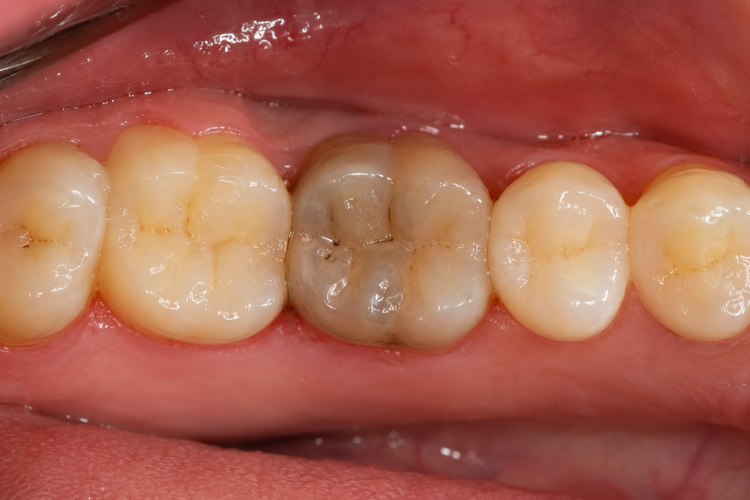
What Causes a Dead Tooth?
A tooth dies when its pulp becomes so inflamed or damaged that blood can no longer flow into it. Common causes include:
- Deep tooth decay – When a cavity is left untreated, bacteria penetrate the enamel and dentine and infect the pulp. Once the infection advances far enough, the pulp can no longer recover and the tissue dies.
- Dental trauma – A knock to the tooth from a fall, sports injury, or accident can sever or damage the blood vessels entering the root. The pulp may die quickly, or gradually over several years, which is why a tooth can darken long after the original injury.
- A cracked or fractured tooth – A crack that reaches the pulp allows bacteria to enter and infect the tissue inside. Even hairline cracks can lead to pulp death over time.
- Advanced gum disease – Severe periodontal infection can spread to the root tip and infect the pulp from below.
- Repeated dental procedures – Teeth that have undergone multiple fillings or restorations are subjected to repeated stress on the pulp, which can eventually cause it to die.
Signs and Symptoms of a Dead Tooth
A dead tooth can cause noticeable changes in colour, sensation, and smell, as well as gum swelling, although some show no symptoms at all and are only found during a routine dental check-up.
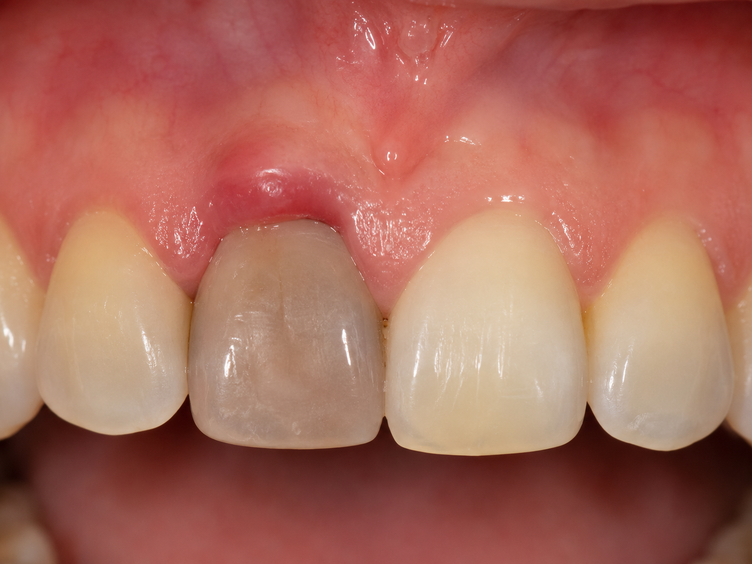
- Discolouration – A dead tooth often darkens from the inside as the dying pulp releases breakdown products, turning yellow, grey, brown, or black, much like a bruise. The stain sits within the tooth, so brushing and whitening toothpaste cannot remove it.
- Pain and discomfort – A dead tooth can be painless or intensely painful, and both need attention. Once the nerve dies the tooth feels nothing, so any pain comes from infection around the root, ranging from a dull ache to severe throbbing when biting. A painless dead tooth is not resolved, as the bacteria inside stay active.
- Bad breath or bad taste – As bacteria break down the dead pulp, they release by-products that cause persistent bad breath or a foul taste that brushing and mouthwash do not clear.
- Gum swelling – The gum around a dead tooth may swell, or form a small pimple-like bump (a draining abscess) that leaks an unpleasant-tasting fluid.
WhatsApp Us Now
Is a Dead Tooth Dangerous If Left Untreated?
An untreated dead tooth poses a genuine risk because the infection inside it can spread beyond the tooth. Potential complications include:
- Dental abscess – Pus collects at the root tip, causing swelling, pain, and sometimes fever. An abscess does not resolve on its own and requires drainage and treatment.
- Bone loss in the jaw – Chronic infection at the root tip gradually erodes the surrounding jawbone, which can complicate future treatment such as dental implants.
- Tooth loss – As the supporting bone and ligament break down, the tooth loosens and may eventually fall out, though this can take years, during which the infection continues.
- Spread of infection – Bacteria can travel to neighbouring teeth, the sinuses, or the soft tissues of the face and neck. In rare cases, a severe untreated dental infection can spread through the bloodstream and become a medical emergency.
How Is a Dead Tooth Diagnosed?
A dead tooth is diagnosed through a combination of clinical examination, sensitivity testing, and X-rays. The process generally involves:
- Visual examination to assess discolouration, decay, cracks, gum swelling, or a draining abscess.
- Pulp vitality testing, where a cold stimulus or a mild electric current is applied to the tooth. A healthy tooth responds to these stimuli, while a dead tooth does not.
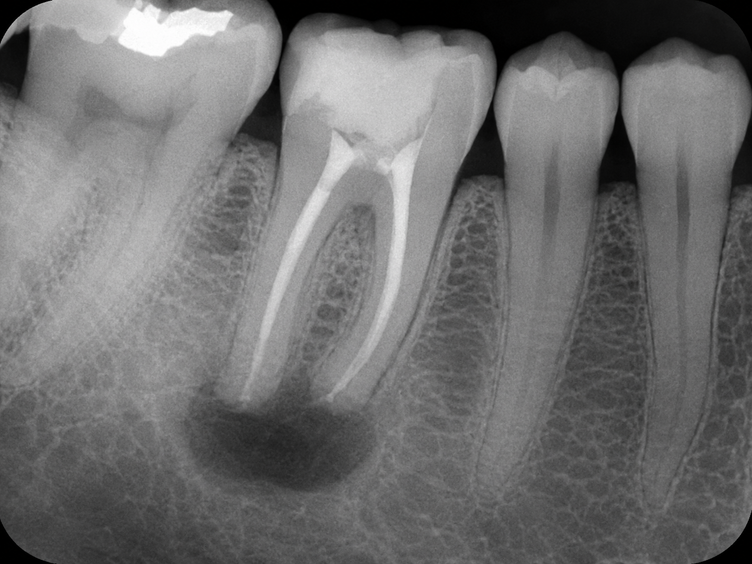
- Dental X-rays to confirm the diagnosis and reveal the infection, which appears as a dark area around the root tip, along with any deep decay or fractures that explain why the pulp died.
Dead Tooth Treatment Options
Treatment for a dead tooth focuses on removing the dead and infected tissue, either by cleaning out the inside of the tooth or removing the tooth entirely. A dead tooth cannot heal on its own, as the pulp does not regenerate once it has died.
Root Canal Treatment
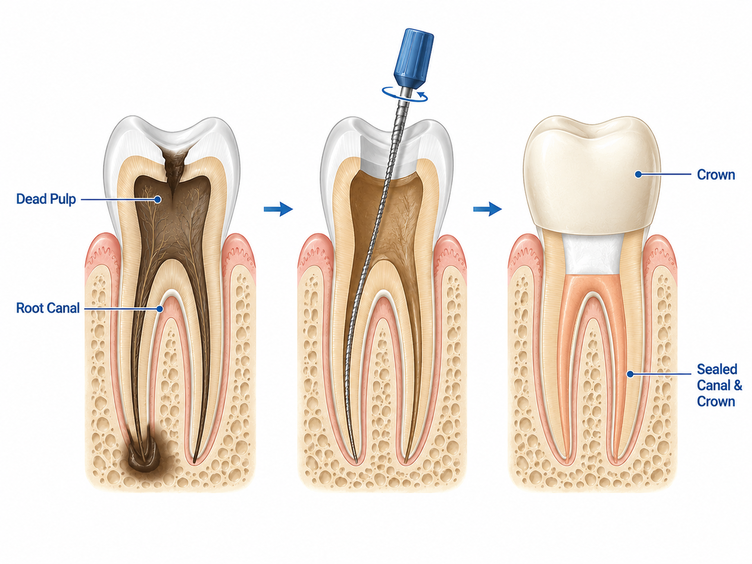
Root canal treatment removes the dead pulp while
keeping the natural tooth in place, and it is the preferred option whenever
the tooth structure is sound enough to save.
The area is numbed with local anaesthetic and the pulp chamber is opened so
the dead tissue can be removed, after which the canals are cleaned,
disinfected, and sealed to prevent reinfection. The tooth is then
restored with a filling and often a dental crown, particularly for back
teeth, as a tooth without its blood supply becomes more brittle over time.
Tooth Extraction and Replacement
Extraction becomes necessary when the tooth is too damaged or infected to save, such
as when decay has destroyed most of the tooth structure or a fracture extends below
the gum line.
After removal, the gap can be restored with a dental implant,
bridge, or denture to maintain chewing function and prevent neighbouring
teeth from shifting into the space.
Cost of Dead Tooth Treatment
At True Dental Studio, our prices for dead tooth assessment and related treatments are as follows:
| Treatment | Price* |
|---|---|
| Consultation | $27.25 to $65.40 |
| Second Opinion Consultation | $27.25 to $65.40 |
| Dental X-ray | From $35.97 |
| Root Canal Treatment | From $708.50 |
| Adult Tooth Extraction | From $98.10 to $272.50 |
| Dental Filling | From $98.10 to $272.50 |
| Dental Crown & Bridge (inclusive of all laboratory fees) | From $1,199 |
*Prices are NETT and inclusive of GST.
The total cost depends on which treatment your tooth needs, which is determined after examination and X-rays. Subsidies may be available under CHAS or the Pioneer Generation scheme, depending on eligibility.
Can You Prevent a Dead Tooth?
You can lower the risk of a dead tooth by protecting the pulp from decay, trauma, and excessive force. Practical steps include:
- Maintain good oral hygiene by brushing twice daily with fluoride toothpaste and flossing once a day, so decay never reaches the pulp.
- Treat cavities and cracks early, as a small filling today can prevent the deep decay that kills a tooth later.
- Wear a mouthguard during contact sports, and a nightguard if you grind your teeth, to protect against trauma and sustained pressure.
- Attend regular dental check-ups, which allow early detection of decay, cracks, and colour changes before the pulp is affected.
When Should You See a Dentist for a Dead Tooth?
You should see a dentist promptly if you notice a tooth darkening, or experience symptoms that suggest the pulp is infected, such as:
- A tooth that has turned yellow, grey, brown, or black.
- Toothache or throbbing pain, especially when biting.
- Swelling or a pimple-like bump on the gum near a tooth.
- Persistent bad breath or a bad taste that does not improve with brushing.
- A tooth that no longer responds to hot or cold after a previous injury.
Because a dead tooth often causes no pain, many patients only discover it when the tooth changes colour. The earlier it’s assessed, the more options we have to treat the infection and protect the tooth.

Dr Tay Chih Kien
Book a Consultation for a Dead Tooth
Book Dead Tooth Consultation
Book NowEnquire More Through Email
Email Us NowEnquire More Through WhatsApp
WhatsApp Us Now
Over 30% of adults feel anxious about dental visits.
Dental visits can indeed be stressful, but at True Dental Studio, we are gentle and patient, committed to helping you feel at ease during your visit.
Dr Tay Chih Kien
Why Choose True Dental Studio?
Friendly Dentist and Team
We treat every patient to the best of our ability. This is why families across Singapore have continued their dental care with us for years.
Minimal Discomfort
We are committed to keeping our patients as comfortable as possible, minimising any discomfort during treatment.

Affordable Treatments
We believe in pricing quality treatments at a competitive rate. We are transparent and upfront with our treatment costs.
Our Smile Scorecard
Frequently Asked Questions
A dead tooth can often be saved with root canal treatment, which removes the dead pulp while keeping the natural tooth in place. This is usually possible when enough sound tooth structure remains. If decay or a fracture has destroyed too much of the tooth, extraction may be the only option. If you have noticed a tooth darkening or aching, it is worth having it checked to assess what is going on.
A dead tooth can stay in the mouth for months or even years, as it does not fall out immediately. This is not a reason to delay treatment, though. The dead tissue inside harbours bacteria that continue to multiply, and the infection can spread silently to the surrounding bone and tissues even when there is no pain. If you suspect a tooth has died, it is advisable to have it examined rather than wait.
Removal is not always necessary for a dead tooth. Whenever enough healthy tooth structure remains, root canal treatment is the preferred option because it preserves the natural tooth. Extraction becomes necessary only when the tooth is too damaged or infected to save, such as when a fracture extends below the gum line. If you are weighing up your options, an examination by a dentist and X-rays can clarify which approach suits your tooth.
A dead tooth cannot be whitened with over-the-counter products, as the discolouration comes from inside the tooth rather than its surface. Its appearance can often be improved with internal bleaching, which is usually carried out after root canal treatment, or with a dental veneer or crown that covers the visible surface and restores a natural colour. If the discolouration bothers you, it is worth discussing which of these options is suitable for your tooth.
A tooth with infection around the root can sometimes contribute to headaches when inflammation spreads or causes referred pain to the head and face. The pain does not come from the dead tooth itself, which no longer has a living nerve, but from infection in the surrounding tissue. If you have an unexplained headache alongside a darkened or aching tooth, it is best to have the tooth checked to rule out infection as the cause.
Throbbing in a dead tooth usually signals infection in the tissue around the root, rather than the tooth itself, which no longer feels anything once the nerve has died. Pressure from pus building up at the root tip can cause a persistent throb that may worsen when biting. Because throbbing often points to an active infection, it is advisable to see a dentist promptly to have it assessed.
Dead tooth nerves cannot regenerate. Once the pulp, which contains the tooth’s nerve and blood vessels, has died, it does not heal or grow back. This is why a dead tooth cannot recover on its own and needs professional treatment to remove the dead tissue, either through root canal treatment or extraction.
Dead tooth extraction is carried out under local anaesthetic, so the area is numbed and discomfort during the procedure is usually minimal. Some soreness and swelling can follow once the anaesthetic wears off, which generally settles within a few days. If you feel anxious about an extraction, it can help to discuss with your dentist what the procedure involves and what to expect afterwards beforehand.
A dead tooth can feel like nothing at all, since the nerve inside has died and the tooth can no longer sense temperature or pressure. In other cases it causes pain, not from the tooth itself but from infection in the surrounding tissue, ranging from a dull ache to severe throbbing. You may also notice it no longer reacts to hot or cold. If a tooth has stopped responding or has started to ache, it is worth having it examined.
Leaving a dead tooth untreated is not advisable, even when it causes no pain. The dead tissue inside harbours bacteria that continue to multiply, and the infection can spread silently to the surrounding bone, neighbouring teeth, and soft tissues. Over time this can lead to an abscess, bone loss, or tooth loss. If you suspect a tooth has died, it is best to have it examined rather than wait for symptoms to appear.
A dead tooth is treated by removing the dead and infected tissue, either through root canal treatment or extraction. Root canal treatment cleans out the inside of the tooth and seals it, keeping the natural tooth in place, and is the preferred option when enough sound structure remains. Extraction is reserved for teeth too damaged to save. An examination and X-rays can determine which approach suits your tooth.
A dead tooth can eventually fall out, but this often takes years and is not a reason to wait. As the infection erodes the supporting bone and ligament, the tooth gradually loosens, but throughout this time the infection continues to spread and can cause further complications. Allowing a tooth to fall out on its own is far riskier than treatment. If a tooth has darkened or loosened, it is advisable to have it assessed by a dentist.
Saving a dead tooth becomes impossible once decay or a fracture has destroyed too much of the tooth structure, or when a crack extends below the gum line. At that stage, root canal treatment can no longer support a lasting restoration, and extraction is usually the only option. The longer a dead tooth is left untreated, the fewer options remain, so an early assessment gives the best chance of preserving it.
A dead tooth is not treated with a filling alone, because the infected pulp inside must first be removed. If the tooth can be saved, this is done through root canal treatment, after which it is restored with a filling and often a dental crown, particularly for back teeth. If the tooth is too damaged to save, it is extracted and the gap can be restored with a dental implant, bridge, or denture.
A dead tooth can range from completely painless to intensely painful. The tooth itself feels nothing once the nerve has died, which is why some people notice no symptoms at all. Any pain comes from infection in the tissue around the root, and can vary from a dull ache to severe throbbing that worsens when biting. If you have ongoing pain or pressure around a tooth, it is best to have it assessed promptly by a dentist.
A dead tooth is identified through a combination of clinical examination, sensitivity testing, and X-rays. A cold stimulus is applied to check whether the tooth responds, as a healthy tooth reacts while a dead one does not. X-rays then confirm the diagnosis by revealing infection at the root tip, along with any deep decay or fractures.
A dead tooth is highly prone to infection, as the dead pulp inside becomes a breeding ground for bacteria. Although the nerve no longer feels anything, the bacteria remain active and can spread to the root tip, forming an abscess, and from there to the surrounding bone and tissues. This is why a dead tooth needs attention even without pain. If you suspect a tooth has died, having it examined can help prevent the infection from spreading.
A dead tooth can cause a noticeable smell or a foul taste in the mouth. As bacteria break down the dead pulp inside, they release by-products that lead to persistent bad breath, which brushing and mouthwash do not clear. The smell is a sign that the infection is active. If you notice ongoing bad breath alongside a darkened or aching tooth, it is advisable to have it assessed and treated.